
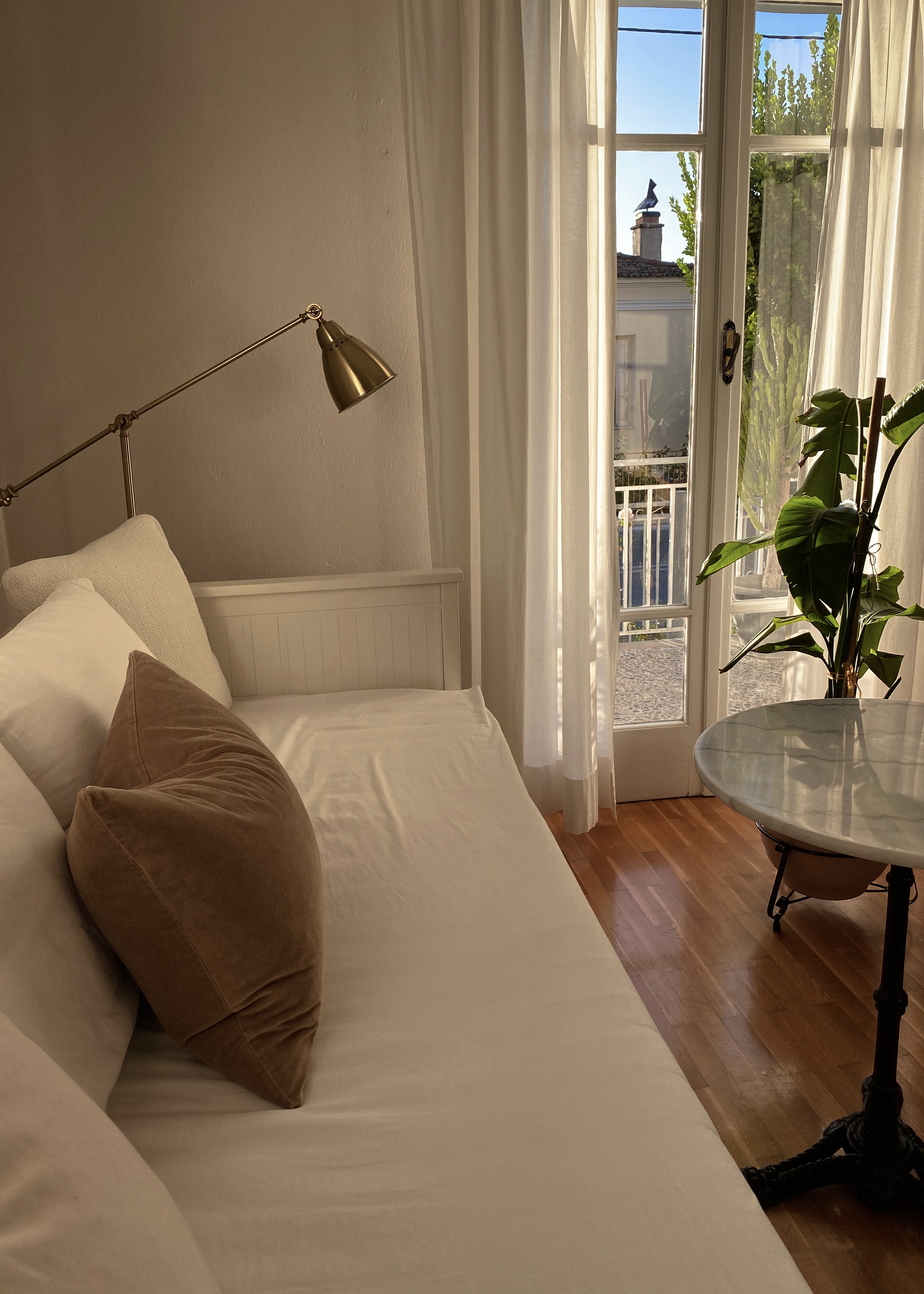
The Morning I Stopped Rushing—And What Happened to the Rest of My Day
Lifestyle
I have been chasing a quiet morning for most of my adult life without knowing that’s what I was doing.
When my son was a baby I used to set my alarm earlier than I needed to. Not to get things done. Not to be productive. Just to sit with my coffee before the house woke up—those few stolen minutes in stillness before the day had any demands in it. I didn’t have a word for what I was protecting. I just knew those minutes felt different from all the others.
Then technology arrived and somewhere along the way I handed those minutes over without noticing. I still woke early. I still made the coffee. But instead of sitting with it, I sat with my phone and the stillness was replaced with noise before I’d taken the first sip. Someone else’s morning. Someone else’s urgency. Someone else’s world pouring into the only quiet I had.
It took me longer than I’d like to admit to understand what that was costing me. Now I do something different. And everything, the whole shape of my day, is different because of it.
The slow morning and what it actually does
I wake up and I make coffee. I make breakfast for my family—my husband, my son—and I watch them leave for the day. And then, before I do anything else, I sit.
No phone. No emails. No easing into the noise of the world through a screen. Just the sunlight coming through the window at its particular angle, my coffee and a quiet I have learnt, slowly over the years, to treat as sacred. I read scripture and I let the morning be a morning before I ask anything of it.
Here is the thing nobody tells you about slowing down your mornings—it doesn’t cost you time. It gives you the whole day back.
After those quiet moments of coffee, stillness and the deliberate absence of urgency—I am sharper. More focused. The writing comes easier. The decisions feel clearer. Ideas arrives without being chased.
The stress that used to accumulate by 10 am simply doesn’t build the same way anymore. The small irritations that once had power to derail an afternoon don’t land as heavily when you began the day from stillness rather than from someone else’s urgency.
I am, counterintuitive, more productive on a slow morning than I ever was on a rushed one. More creative. More present for the people around me. More myself.
A slow morning doesn’t mean a passive one. After my quiet I move—a workout, because my body is part of how I stay grounded. Then the day opens up—the market if it’s market day, coffee with a friend at a table outside, errands that feel like living rather than logistics.
The slow morning doesn’t end when I stand up from my chair. It sets the tone for everything that follows. It is the difference between a day I move through and a day I actually live.
” A slow morning doesn’t cost you time. It gives you the whole day back.”
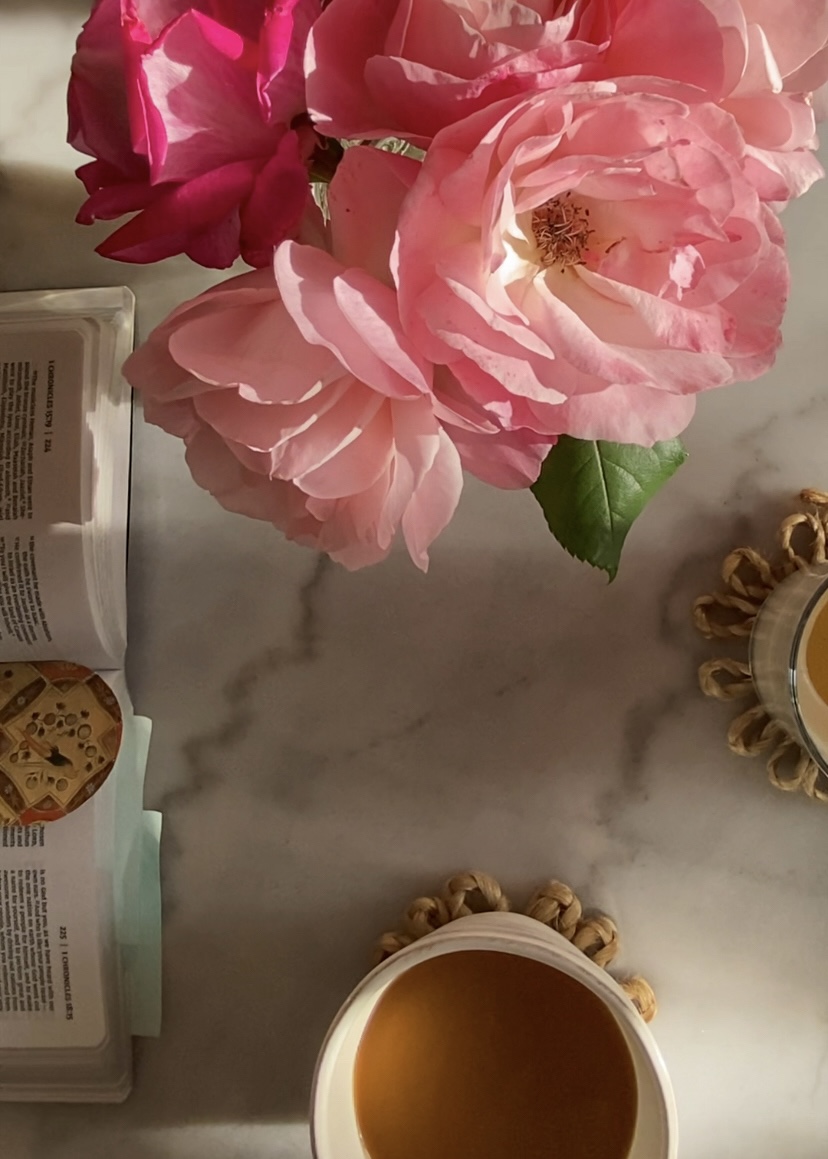
On meals and why they are never rushed
Meals in this house are always intentional. Not always elaborate—a quick lunch is still a real lunch—but never careless.
Good ingredients. The table is set properly, even for two. No screens nearby. A real pause in the middle of the day that says, this matters. You matter. What you put in your body and who you share it with matters.
This is not a Southern Greek invention, though the culture here has certainly reinforced it. It is simply the recognition that food eaten in a hurry, standing at the counter, half-distracted, is not really eating at all. It is fuelling, which is different entirely.
There is a version of a quick lunch that is still completely intentional—good bread, good olive oil, something seasonal from the market, eating sitting down at a table that has been set with care even if only for one. That is not a compromise on slow living. That is slow living. The intention is in the attention, not the hours spent cooking.
Slow living, for me, begins at the morning table and returns to the evening one. Everything in between is better for having those two anchors.

What slow living actually means—in practise
Slow living is not a philosophy I arrived at through reading, though I have read about it. It is a series of small, daily decisions that together create life I recognise as mine.
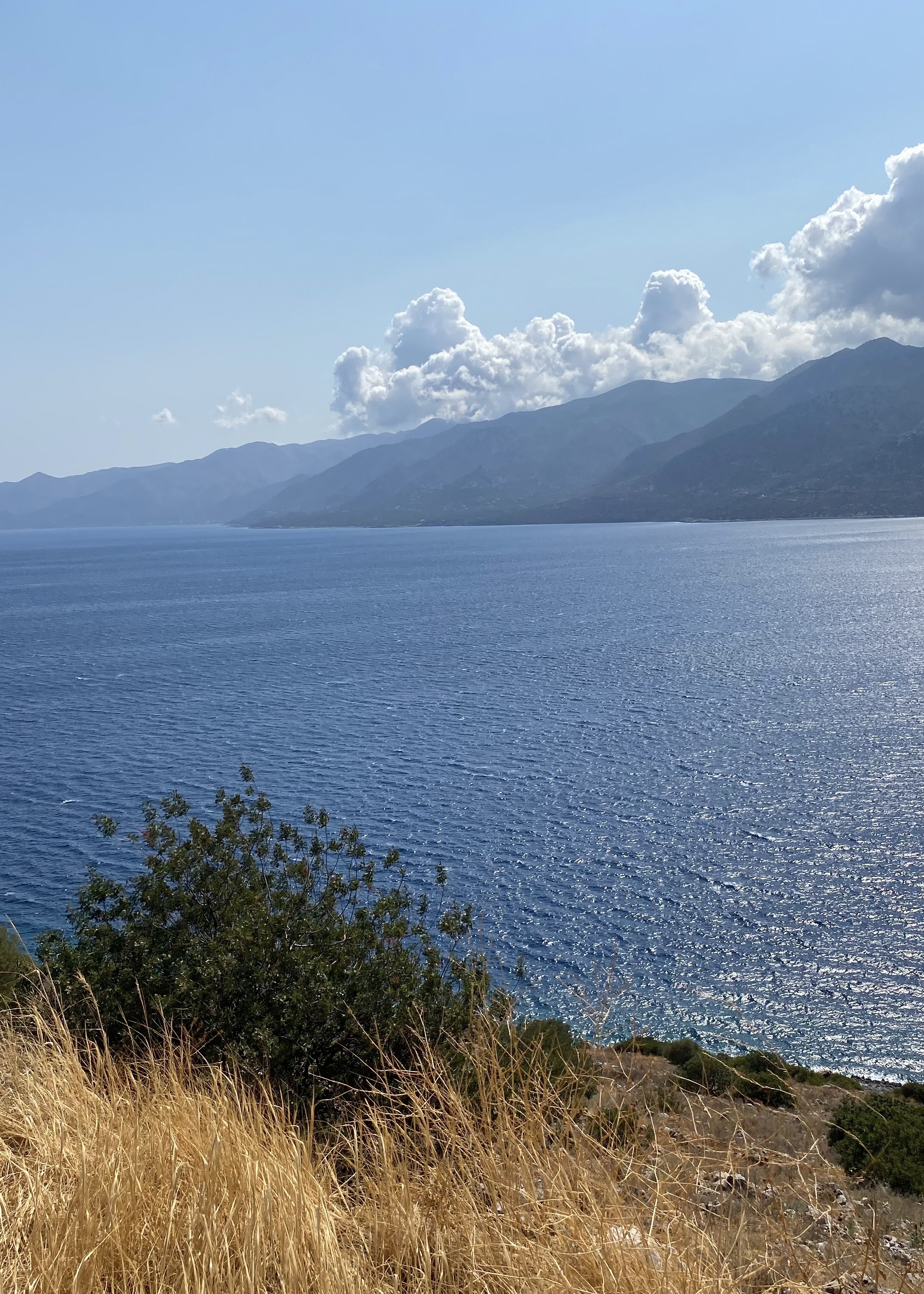
It means leaving the to-do list when the day calls for something better. The housework will always be there. The afternoon light on the sea will not. Sometimes you load the dishwasher. Sometimes you leave it, get in the car, drive to the coast and have lunch at a table overlooking the water. Both are the right choices depending on the day, and part of living slowly is learning to tell the difference.
It means less doomscrolling and more reading. An actual book, in an actual chair, for an uninterrupted stretch of time that once felt indulgent but now feels essential. It means choosing, deliberately and repeatedly, to put the phone down and pick up something that actually feeds your soul.
It means Sundays that belong to the family—unhurried, unscheduled, built around the table and whoever gathers around it. Impromptu dinners with friends that run long because no one is watching the time. The kind of ordinary evening that becomes the one you remember the most.
It means saying yes to get-togethers when the house isn’t clean. Yes to the spontaneous coffee. Yes to the long way home.
And it means that the to-do list is never actually finished—so the question is never whether everything is done, but whether the things that cannot be rescheduled are being shown up for. The light on the sea at 3pm cannot be rescheduled. The conversation your child wants to have right now, standing in the kitchen, cannot be rescheduled. These are the things that slow living protects.
None of this is complicated. Most of it costs nothing. All of it requires the same thing—the daily decision to protect the pace.
A word about where I live
Southern Greece makes this easier. I will not pretend otherwise. There is an ethos here—in the culture, in the rhythm of the seasons, in the way a meal is treated as an event—that tilts naturally toward slowness. The table is sacred. Friendship is practise in person, regularly, without much scheduling. The seasons are the actual structure of the year.
But I want to be honest about something because I think it matters; slow living is not simply what happens when you move to Greece. The rush exists here too. The urgency, the distraction, the pressure to keep up—it crosses borders. It is not a Canadian import I accidentally brought with me. It is a human condition and it is alive and well in Southern Greece.
What Greece did give me—unexpectedly and without resistance on my part—was a set of circumstances that forced me to stop.
Coming from Montreal, I was accustomed to a city that never fully pauses. Shops open whenever you need them. Sunday is just another day. The rhythm of the week is determined by productivity, not by rest.
And then I arrive here, where shops close on Sunday and they mean it. Where the afternoon has a stillness built into it that isn’t negotiable. Where certain things do not happen on certain days and the world does not end because of it—in fact, something in the world quietly rights itself.
I won’t pretend I found this easy at first. I didn’t. I found it frustrating before I found it freeing. I had to learn slowly and sometimes reluctantly, that a Sunday without open shops was not a Sunday of deprivation. It was a Sunday that belong to something else entirely—to God, to rest, to family, to the table, to the kind of time that doesn’t produce anything and is therefore, paradoxically, the most valuable kind.
Greece didn’t hand me slow living. It handed me the conditions and made me figure out what to do with them. The practise—the morning quiet, the intentional meals, the things I want to keep close—that part was mine to choose.
It still is, every day.
Slow living is not a destination. It is not a country you move to or an aesthetic you curate or a version of yourself you become when the conditions are right.
It is a decision. Made in the morning before the phone. Made at the table before the rush. Made on a Sunday when the shops are closed and the day asks nothing of you and you finally let it.
I am still learning this. Some mornings I get it right. Some mornings I reach for my phone before the coffee is made and have to begin again. But I always begin again. That, I think, is the whole practice.
Editor’s Note—
Every Sunday I sit at my familiar bistro table in Southern Greece and write a newsletter.
It is not a newsletter in the way you might expect. There are no five tips, no productivity hacks, no content calendars. There is just writing—honest, unhurried, rooted in the rhythms of life. The Sunday Notes is where I write about the things that don’t fit anywhere else. The morning quiet. The market on Wednesday. An unforgettable place I visited. The book I keep returning to. The small, unremarkable moments that turn out, on reflection, to be the whole of it.
It is written for people who want their reading slow and their Sunday mornings a little fuller. If that sounds like you—come in. It’s free. And it will arrive like a letter from someone you know.
—>Subscribe to
The Sunday Notes